

Tree Pruning in Tacoma, WA
Professional Tree Pruning for Homes, Businesses & Properties Across Pierce County
Free estimate, no obligation.
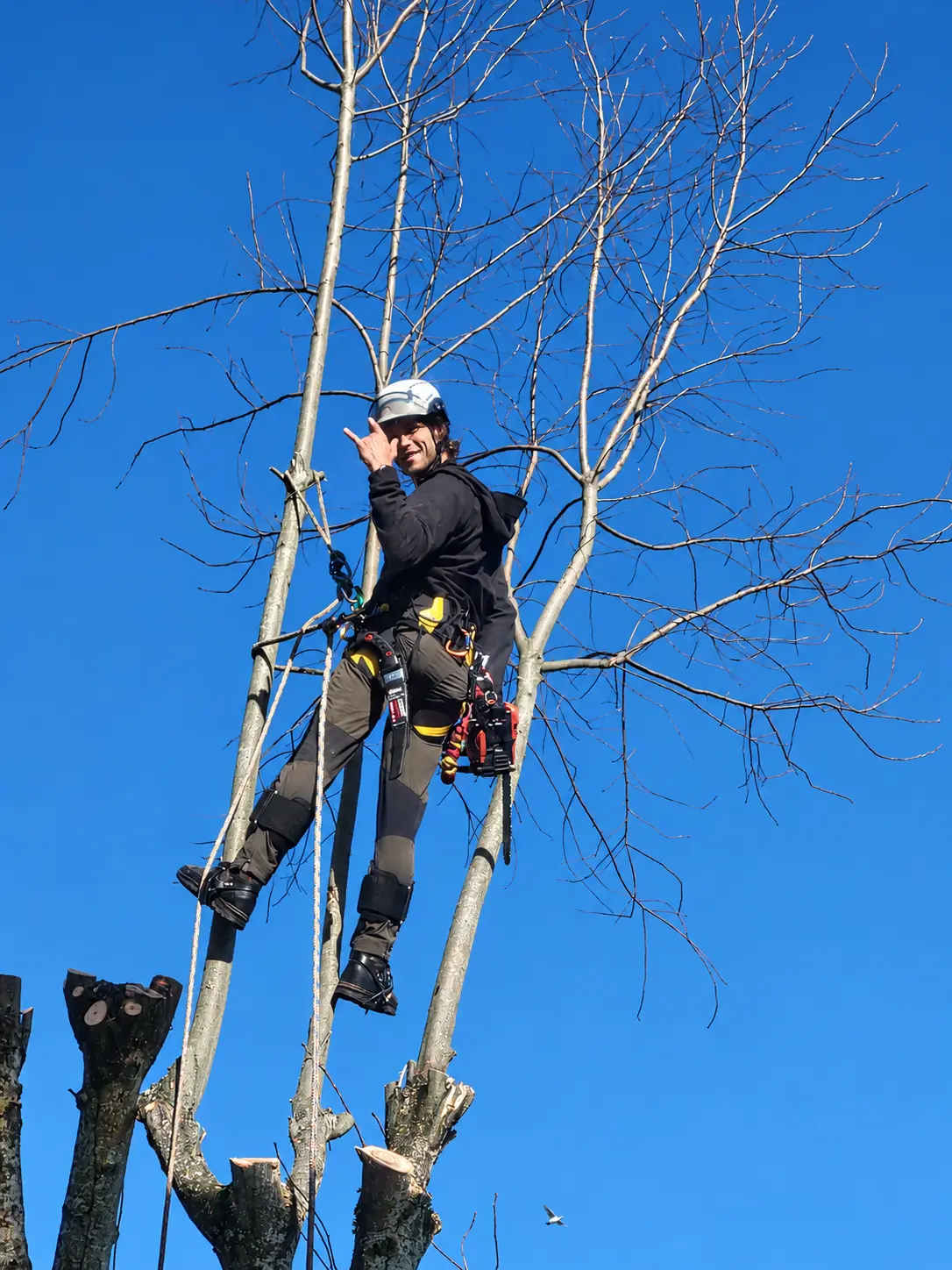
Signs Your Tree May Need Pruning
Avoid the Problems Caused by Improper Pruning
Improper pruning can permanently weaken a tree’s structure and create problems that are more difficult to correct later. Removing too much live growth, making unnecessarily large cuts, or topping a tree can increase stress and encourage weak or poorly positioned regrowth.
Proper pruning begins with a clear purpose. The tree’s species, age, condition, structure, and location help determine which cuts are appropriate and how much growth should be removed at one time.
We focus on pruning recommendations that address your property’s needs while considering the tree’s long-term structure, health, and appearance.

Request a Free Tree Service Estimate
How Our Tree Pruning Service Process Works
Request a Free Pruning Estimate
We Assess the Tree
We Determine What Should Be Pruned
We Complete the Pruning and Clean Up
Residential & Commercial Tree Pruning
What Type of Tree Pruning Does My Tree Need?
The appropriate pruning method depends on the tree’s species, condition, branch structure, location, and the problem that needs to be addressed. Some trees need dead or damaged branches removed, while others may benefit from structural pruning, clearance pruning, or selective branch reduction.
Pruning should have a defined objective rather than simply removing as much growth as possible.
Dead & Damaged Branch Removal
Dead, broken, cracked, or partially detached branches may need to be removed before they fall or create additional problems around the property. This is especially important when damaged limbs extend over roofs, driveways, walkways, parking areas, yards, or other frequently used spaces.
We assess the affected branch, its connection to the tree, and what lies below or around it before determining how the limb should be removed. If we find damage extending beyond an individual branch, we can explain whether additional evaluation or tree work may be appropriate.
Structural Pruning
Structural pruning focuses on how a tree’s branches are developing and how that structure may affect the tree as it matures. Competing leaders, crossing branches, rubbing limbs, and poorly positioned growth can become increasingly difficult to correct as branches become larger.
For younger trees, selective pruning can help guide future branch development. With mature trees, we consider the existing structure, branch size, canopy balance, and consequences of removing a particular limb before recommending cuts.
Clearance Pruning
Branches may need pruning when they have grown too close to a roof, siding, driveway, walkway, fence, parking area, or another part of the property.
The objective is not simply to cut a branch back as far as possible. We identify the limbs creating the interference and determine whether they should be removed, shortened, or selectively reduced. This improves useful clearance while retaining as much appropriate canopy structure as possible.
Selective Branch Reduction
Not every long or overextended branch needs to be removed completely. In some situations, selective branch reduction can shorten a limb while retaining appropriate lateral growth and much of the existing branch structure.
This approach may be appropriate when a branch extends toward a structure, driveway, neighboring property, or another area where its length has become a concern. The correct method depends on the tree species, branch size, condition, structure, and available growing space.
If you’re unsure which type of pruning your tree needs, Arbor Services Northwest LLC can evaluate the tree and recommend an approach based on its condition, location, and the problem you are trying to solve.
Tree Pruning Throughout Tacoma & Pierce County
Arbor Services Northwest LLC provides tree pruning in Tacoma, Puyallup, Fircrest, Lakewood, Fife, Parkland, University Place, Ruston, Edgewood, Steilacoom, and nearby Pierce County communities.
Whether you need dead branches removed, limbs pruned away from a roof or driveway, overgrown growth selectively reduced, storm-damaged branches addressed, or help determining how much to prune, our team can evaluate the tree and recommend an appropriate approach.
If you’re searching for a tree pruning company near Tacoma or wondering whether a tree needs trimming, structural pruning, clearance pruning, or selective branch reduction, contact Arbor Services Northwest LLC to schedule an assessment and request a free estimate.
Frequently Asked Questions
About Tree Pruning in Tacoma, WA
Tree pruning costs vary according to the size and condition of the tree, the number and size of branches being pruned, access to the work area, proximity to structures or utilities, and the type of pruning required. A small ornamental tree with accessible branches is very different from a mature tree requiring climbing, rigging, or specialized equipment.
Rather than relying on a generic price based only on tree height, Arbor Services Northwest evaluates the tree and the work required before providing an estimate. The scope may include deadwood removal, clearance pruning, structural pruning, selective reduction, cleanup, or a combination of services.
The appropriate pruning season depends on the tree species, its condition, and the reason for pruning. There is no single pruning month that is correct for every tree in the Tacoma area.
Dead, broken, or hazardous branches can require attention regardless of the season. Routine structural or maintenance pruning should be planned around the tree's biology and the objective of the work. Local weather and the species involved can also influence timing.
If you're unsure whether your tree should be pruned now or at another time of year, an evaluation can determine whether the work is seasonal, corrective, or safety-related.
The amount of live growth that should be removed depends on the tree's species, age, condition, structure, and pruning objective. Removing excessive live branches at once can place unnecessary stress on the tree and alter its structure.
For that reason, professional pruning should focus on the specific branches that need attention rather than treating the entire canopy as something that needs to be cut back. Mature trees can require a particularly conservative approach because large cuts can have long-term structural and biological consequences.
The appropriate amount of pruning is determined during the assessment rather than by a one-size-fits-all percentage.
Tree trimming and tree pruning are often used interchangeably, but professional pruning is more than simply cutting back overgrown branches. Pruning involves selectively removing branches for a defined objective such as improving structure, removing deadwood, addressing clearance, reducing a specific branch, or managing a safety concern.
"Tree trimming" is commonly used by homeowners and service companies as a broader term for cutting branches. The important distinction is the purpose and method of the work. Arbor Services Northwest evaluates the tree and identifies the cuts needed rather than simply removing growth to make the canopy smaller.
In some situations, appropriate pruning can address a tree problem without removing the entire tree. Removing hazardous deadwood, correcting certain structural conflicts, improving clearance, or selectively reducing problematic branches may allow a tree to remain on the property.
Pruning cannot correct every problem. A tree with severe structural failure, extensive decay, major root problems, or an unacceptable risk may require a different solution, including removal. Arbor Services Northwest can evaluate the tree and explain whether pruning, removal, or another management approach is appropriate.
Yes. Clearance pruning can address branches that have grown too close to roofs, siding, gutters, windows, or other structures. The goal is to create useful separation while avoiding unnecessary removal of healthy canopy.
The appropriate cut depends on the branch's size, attachment, direction of growth, species, and the amount of clearance required. Simply cutting a branch back to an arbitrary point can create weak regrowth or leave a poorly positioned branch. We evaluate the branch structure before determining whether a limb should be removed, shortened, or selectively reduced.
Yes, but storm-damaged trees should be assessed carefully before pruning begins. Broken, split, hanging, or partially detached branches can be unstable, and additional damage may extend into the trunk or larger scaffold branches.
If a tree has suffered significant storm damage, the appropriate response may range from removing individual damaged limbs to more extensive pruning or, in severe cases, complete tree removal. If electrical lines are involved, stay away from the tree and contact the utility provider. Arbor Services Northwest can evaluate storm-related tree damage and determine the appropriate next step.
Pruning requirements depend on where the tree is located. Tacoma requires a Right-of-Way Tree Work permit before pruning regulated trees in the public right-of-way. The City states that right-of-way pruning must comply with applicable Tacoma regulations, the Urban Forestry Manual, and ANSI A300 standards.
The City's current tree FAQ states that permits are generally not required for pruning trees on private property, although other regulations can apply depending on the property and circumstances.
If the tree is located along a street or within the public right-of-way, confirm the permitting requirements before work begins.
Tree topping is generally not an appropriate substitute for professional pruning. Topping removes large portions of a tree's canopy and can leave large wounds and poorly attached regrowth. It can also permanently alter the tree's natural structure.
When a tree has become too large for its location, the appropriate solution depends on the species, structure, available space, and reason for the concern. Selective pruning or reduction may address certain problems without indiscriminately removing large portions of the canopy. In some cases, removal may ultimately be more appropriate if the tree cannot be safely managed in its location.
The decision between pruning and removal depends on the tree's structural condition, health, location, risk, and the problem that needs to be addressed. A mature tree with healthy structure may only require selective pruning to remove deadwood, improve clearance, or address specific structural conflicts.
Removal becomes a consideration when defects, decay, root problems, storm damage, or structural failure create a level of risk that cannot be reasonably managed through pruning.
Arbor Services Northwest can evaluate the tree and explain whether pruning can address the concern or whether professional tree removal is the more appropriate solution.