

Tree Removal Service in Tacoma, WA
Safe, Professional Tree Removal for Homes & Businesses
Arbor Services Northwest LLC provides safe, professional tree removal in Tacoma, WA, and nearby Pierce County communities. We help homeowners, businesses, property managers, and commercial property owners remove trees that are unsafe, damaged, dead, diseased, overcrowded, or no longer suitable for the space.
A removal may be needed when a tree is leaning, splitting, storm-damaged, growing too close to a structure, blocking access, crowding the landscape, or creating risk near a roof, fence, driveway, walkway, parking area, vehicle, or building.
From small ornamental trees to large evergreens and mature hazardous trees, our team plans each removal carefully with a focus on safety, cleanup, and protecting the surrounding area.
Free estimate, no obligation.
When Should a Tree Be Removed?
A tree does not always need to be removed, but removal may be the safest or most practical option when the tree creates a property risk, health concern, or long-term maintenance issue.
Tree removal may be recommended if the tree is:
- Dead, dying, or severely damaged.
- Leaning toward a home, building, driveway, fence, vehicle, or walkway.
- Split, cracked, or structurally unstable.
- Damaged by storms, high winds, or saturated soil.
- Dropping large limbs or showing signs of branch failure.
- Growing too close to a roof, foundation, fence, utility area, or structure.
- Diseased, decayed, or weakened beyond practical maintenance.
- Crowding other trees or interfering with landscape plans.
- Blocking access, visibility, sunlight, or usable outdoor space.
Request Tree Removal in Tacoma, WA
Why Choose Arbor Services Northwest LLC?
Hazardous Tree Removal
Arbor Services Northwest LLC provides hazardous tree removal in Tacoma and nearby areas for trees that are dead, leaning, cracked, split, unstable, storm-damaged, or positioned in a risky location. Our team evaluates the tree, the surrounding property, access points, and nearby structures before planning the safest removal approach.
Emergency Tree Removal
Arbor Services Northwest LLC provides emergency tree removal in Tacoma, WA, and nearby Pierce County communities. Our team can assess storm-damaged trees, remove dangerous limbs or trunks, clear blocked access areas, and help restore safer conditions around the property.
If a tree has fallen on your property or appears unsafe after a storm, avoid the damaged area and contact a professional tree removal company.
Residential Tree Removal
Homeowners often call for tree removal when a tree is too close to a house, leaning toward a structure, dropping limbs, blocking sunlight, damaging a fence, interfering with outdoor space, or creating concern after a storm. Our team works carefully around homes, roofs, fences, vehicles, lawns, gardens, and nearby landscape features.
Commercial Tree Removal
Our team can help remove unsafe, dead, damaged, overgrown, or poorly located trees from commercial landscapes, parking areas, building perimeters, common areas, and managed properties. We focus on safe work, clear communication, efficient removal, and minimizing disruption whenever possible.
Stump Grinding After Tree Removal
Arbor Services Northwest LLC provides stump grinding for newly removed trees and old stumps on residential and commercial properties. Grinding the stump can make the area safer, cleaner, and easier to use for landscaping, lawn care, or future outdoor improvements.
Serving Tacoma and Nearby Communities
Arbor Services Northwest LLC is based in Tacoma, WA, and provides professional tree services throughout Pierce County and nearby communities.
Service areas include:
Tacoma, Puyallup, Fircrest, Lakewood, Fife, Parkland, University Place, Ruston, Edgewood, Steilacoom, and surrounding areas.
Our team helps residential and commercial property owners with tree removal, emergency tree removal, pruning, trimming, stump grinding, storm cleanup, and ongoing tree maintenance.
Frequently Asked Questions
About Tree Removal in Tacoma, WA
Tree removal costs vary based on the size, condition, location, and complexity of the tree. In Tacoma, the main factors affecting the price include the tree's height and diameter, species, structural condition, proximity to homes and other structures, access for equipment, nearby power lines, slope or difficult terrain, and the amount of rigging required. Debris hauling and stump grinding can also affect the total project cost. Because every property is different, Arbor Services Northwest provides free estimates so the tree and surrounding site can be evaluated before a price is provided.
Tacoma tree-removal permit requirements depend on where the tree is located and the circumstances of the removal. Trees located in the public right-of-way generally require a permit, while certain trees on private property may also be subject to permitting requirements, particularly when they are located in regulated Critical Areas or are associated with certain development projects. Regulations can change, so property owners should verify the current requirements before removing a regulated tree. Arbor Services Northwest can help identify potential permitting considerations during your estimate.
A tree may need to be removed when it presents a significant risk to people or property or has sustained damage that cannot be safely addressed through pruning or other tree-care measures. Warning signs can include extensive decay, a split or damaged trunk, large dead or broken limbs, substantial root damage, a pronounced structural lean, severe storm damage, or evidence that the tree is failing. However, a large or unhealthy-looking tree does not automatically need to be removed. In some cases, professional tree pruning and maintenance may address the problem while allowing the tree to remain.
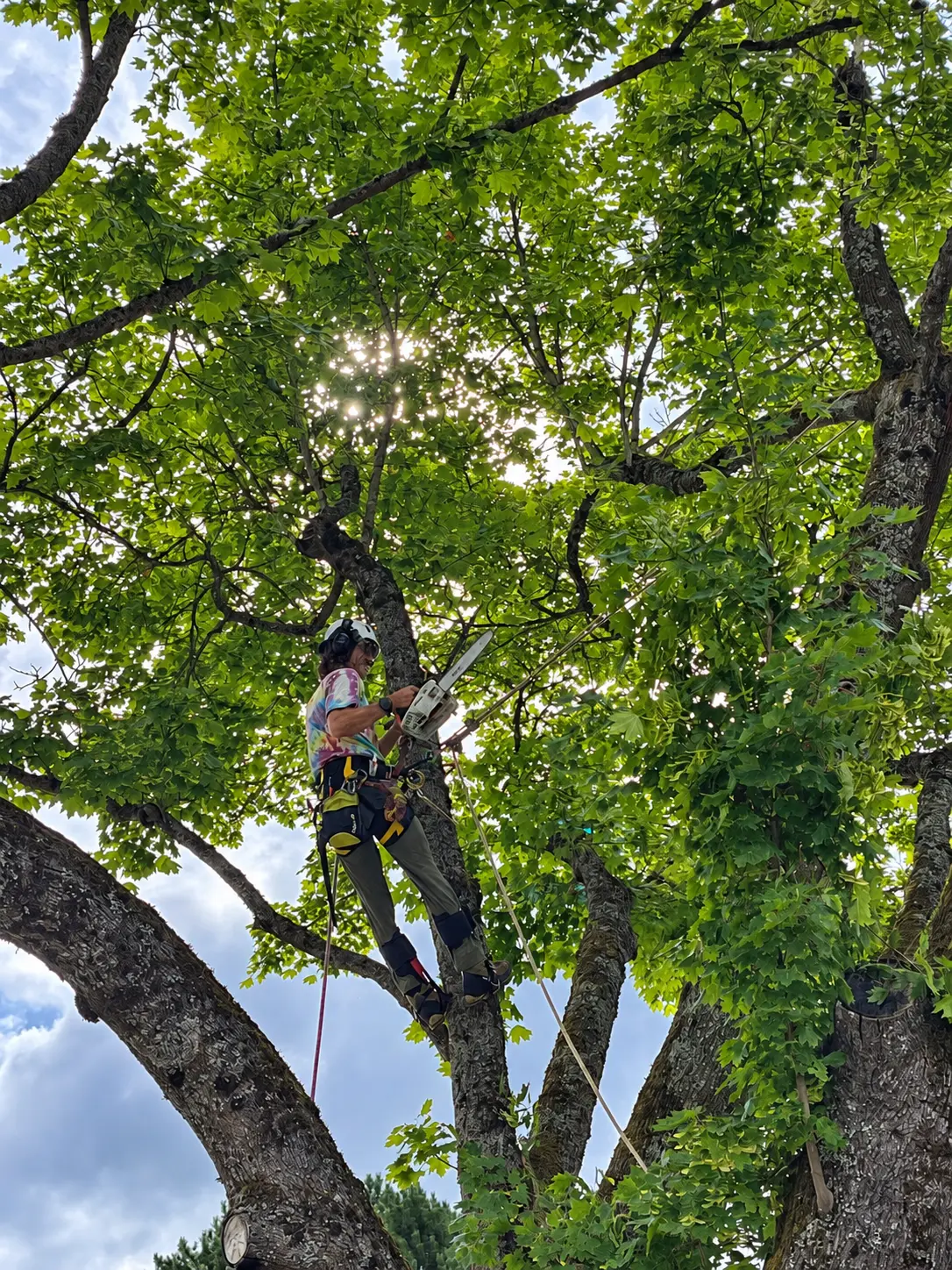
Trees growing close to structures often require controlled, sectional removal rather than simply being cut at the base. The removal method depends on the tree's height, condition, lean, surrounding obstacles, available access, and the potential consequences of falling limbs or sections of trunk. For confined removals, sections of the tree may be climbed, cut individually, and lowered under control using ropes and rigging. Equipment placement and protection of surrounding property are also considered before work begins. This approach is particularly important for large trees located near homes, fences, driveways, garages, or other structures.
Yes. Arbor Services Northwest provides emergency tree removal for dangerous or storm-damaged trees. A fallen tree, partially uprooted tree, split trunk, or large broken limb can remain unstable even after it appears to have stopped moving. Trees under tension can shift unexpectedly when cut, creating serious hazards for anyone attempting DIY cleanup. If a tree has fallen onto a house, vehicle, road, or utility line, keep people away from the area and contact the appropriate emergency or utility provider when necessary. For storm-related tree hazards, Arbor Services Northwest can assess the situation and determine the safest removal and cleanup approach. Learn more about emergency tree removal.
Tree removal near power lines requires special safety precautions and should never be attempted as a DIY project. If a tree or branch is touching an overhead electrical line, stay away from the tree and contact the appropriate utility provider. Do not climb the tree, cut branches, or operate equipment near a potentially energized line. For trees that are close to, but not contacting, utility lines, the removal plan still needs to account for the location of the lines, equipment, and the direction in which branches and sections can be safely lowered. Arbor Services Northwest can evaluate the site and identify the appropriate next step.
Tree removal, stump grinding, and debris hauling are related services but should be clearly defined in the project scope. Removing a tree generally involves safely taking down the above-ground portion and processing the resulting branches and wood. Stump grinding removes the remaining stump below the surrounding grade, allowing the area to be reclaimed or landscaped. Cleanup and hauling determine what happens to the branches, logs, and other debris after removal. If you want the stump ground, wood hauled away, or the site prepared for another use, those requirements should be discussed when the estimate is prepared.
Tree removal can take anywhere from a relatively short visit to a full day or longer, depending on the complexity of the job. A small tree in an open yard may be removed relatively quickly, while a large tree between structures, over a roof, or near utility lines can require substantially more planning and controlled removal. The number of trees, tree condition, site access, equipment requirements, rigging, weather, permitting, and cleanup can all affect the schedule. During an estimate, Arbor Services Northwest can evaluate the site and provide a more realistic expectation for the project's scope and timeline.
If a tree appears dangerous or unstable, keep people and pets away and do not attempt to climb, cut, or stabilize it yourself. Particular caution is necessary when a tree is leaning, partially uprooted, split, severely damaged, or located near a structure or electrical line. If you need help determining whether a tree represents a significant risk, Arbor Services Northwest provides tree safety assessments. If the tree presents an immediate public hazard or involves electrical infrastructure, contact the appropriate emergency or utility authority as well.
A professional tree removal begins with an assessment of the tree, surrounding property, access, utilities, and site-specific hazards. The appropriate removal method is then selected based on the physical constraints and risks of the site. Depending on the tree, the crew may use climbing, sectional removal, rigging, mechanical equipment, or controlled lowering techniques rather than allowing large sections to fall freely. After the tree is removed, the agreed-upon wood processing, debris hauling, cleanup, and stump grinding can be completed. If permitting is required, that should be addressed before work begins. The objective is to remove the tree while controlling risks to people, structures, landscaping, and surrounding property.